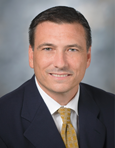
John V. Heymach, MD, PhD
Photo: John V. Heymach

Interests/specialties:

Resources:

Elected 2013

Email: jheymach@mdanderson.org

Phone: 713-792-6363

John Heymach, MD, PhD is the Chair and Professor in the Department of Thoracic/Head and Neck Medical Oncology at MD Anderson, and holds prestigious Ruth Legett Jones Distinguished Chair. He completed his undergraduate studies at Harvard University magna cum laude and earned both his M.D. and Ph.D. degrees from Stanford University Medical School. His postgraduate training included an Internal Medicine internship and residency at Brigham and Women’s Hospital, followed by a Medical Oncology fellowship at the Dana-Farber/Mass General Brigham Fellowship program. During his fellowship, he received clinical mentorship from Bruce Johnson, M.D., at DFCI and conducted research in the laboratory of Judah Folkman, M.D., a pioneer in the field of tumor angiogenesis. During this time Dr. Heymach led some of the earliest studies of angiogenesis inhibitors and other TKIs. He joined the MD Anderson faculty in 2005 as an Assistant Professor and ascended to his current roles as Chair and Professor in 2013.

Dr. Heymach is internationally recognized as a leading physician-scientist whose laboratory has been at the forefront of deciphering mechanisms of drug resistance for targeted agents and immunotherapy, identifying novel therapeutic targets and elucidating therapeutically relevant subgroups of lung cancer. These advances have laid the foundation for new standards of care for tailoring both targeted agents and immunotherapy for lung cancer, particularly those non-small cell lung cancers (NSCLC) driven by EGFR, HER2, and KRAS oncogenic mutations. Contributions include the discovery that co-occuring genomic alterations in STK11 and KEAP1 identify subgroups of KRAS mutant lung cancers that immunotherapy resistant, and the development of treatment approaches to overcome this immunotherapy resistance; identification of the key structural features of EGFR and HER2 exon 20 insertions leading to novel tyrosine kinase inhibitors (TKIs) that have become new standards of care; the development of a structure-based classification for predicting response to EGFR inhibitors now widely utilized in clinical trials; and the development of new immunotherapy-based regimens combined with surgery and radiation that have significantly improved cure rates and established new standards of care for early stage and oligometastatic NSCLC.

Dr. Heymach is the PI on multiple NCI R01s, U01s, and CPRIT awards as well The University of Texas/ UT Southwestern Lung SPORE grant. He is a past recipient of the Damon Runyon Clinical Investigator Award, the Wilson Stone Award for Basic Science Research, the Emil J. Frei Award for Translational Research, Potu N. Rao Award for Excellence in Basic Science and the Randall Award for Excellence in Cancer Research. He was elected a fellow of the American Society for Clinical Investigation, the American Association for the Advancement of Science (AAAS), and the American Association of Physicians.