
Interests/specialties:
Email: benjamin-singer@northwestern.edu
Phone: 3125034494
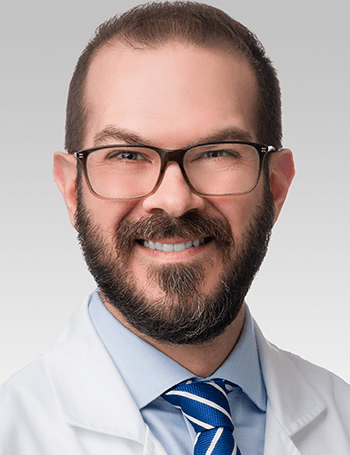
Benjamin D. Singer, MD, is vice chair for research in the Department of Medicine, the Lawrence Hicks Professor of Pulmonary Medicine, and associate professor of Medicine (Pulmonary and Critical Care) & Biochemistry and Molecular Genetics at the Northwestern University Feinberg School of Medicine. Dr. Singer earned his MD from the Feinberg School of Medicine, where he also completed residency and chief residency in internal medicine. He then undertook fellowship training in pulmonary and critical care medicine at the Johns Hopkins University School of Medicine before returning to Feinberg as a faculty member in the Departments of Medicine & Biochemistry and Molecular Genetics. He currently serves as an ASCI Councilor, associate editor for the JCI, and vice chair of the ASCI's Physician-Scientist Development Committee.
Dr. Singer’s laboratory asks a key question: How can we promote resolution of lung inflammation and repair of lung damage? His research program is thematically centered on how epigenetic and metabolic mechanisms control the immune response to pneumonia-induced lung injury. His work leverages cutting-edge technologies, including machine learning/AI methodologies, to dissect the biology of genetic interventions in mouse models of lung infection as well as to probe samples from patients with severe pneumonia. He has found how a subset of T cells known as regulatory T cells orchestrates resolution and repair, discovering epigenetic mechanisms—chiefly those that involve DNA methylation and mitochondrial metabolism—that govern regulatory T cell identity and function. His studies have led to clinical trials for patients with severe pneumonia and other inflammatory disorders, and he has gone on to apply his findings to the fields of aging, autoimmunity, immunodeficiency, and cancer. He has published in leading journals, including the JCI, Nature, and Nature Immunology, while at the same time maintaining a translational focus in critical care medicine, caring for patients with life-threatening conditions in the ICU. He is deeply committed to training the next generation of physician-scientists, directing Northwestern's Physician-Scientist Training Program for 9 years and mentoring trainees across multiple NIH-funded T32 programs. He also specializes in medical diagnostic challenges as the leader of Northwestern Medicine’s Difficult Diagnosis Service (The Socrates Project).